





Mostrando entradas con la etiqueta Astronomía. Mostrar todas las entradas
Mostrando entradas con la etiqueta Astronomía. Mostrar todas las entradas




A Virtual Universe Nature Video


Clic en la imagen
Scientists at MIT have traced 13 billion years of galaxy evolution, from shortly after the Big Bang to the present day. Their simulation, named Illustris, captures both the massive scale of the Universe and the intriguing variety of galaxies -- something previous modelers have struggled to do. It produces a Universe that looks remarkably similar to what we see through our telescopes, giving us greater confidence in our understanding of the Universe, from the laws of physics to our theories about galaxy formation.
Fuente: Nature Video

Alma Observatory Antennas Manufacturing

Click on image
Short video of the manufacturing scene of the Japanese ALMA antennas.
- Machining of the antenna mount structures
- Design and development of the direct drive system
- Design and development of the precise positioning system (Metrology system)
- Machining of the antenna mount structures
- Design and development of the direct drive system
- Design and development of the precise positioning system (Metrology system)
Fuente: ALMAJapanChannel
Hiperespacio - Vida DC
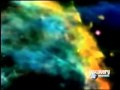


La utilización de innovadoras técnicas gráficas de computación desarrolladas específicamente para esta serie, transportarán al hombre a lugares inaccesibles. Además de conocer muy de cerca la magnífica superficie del sol y sus tremendas explosiones, el televidente experimentará el increíble poder que emana de un agujero negro.
Fuente: Navegan2


CubeSat Project Access Space


The CubeSat Project was developed by California Polytechnic State University, San Luis Obispo and Stanford University's Space Systems Development Lab. The CubeSat program creates launch opportunities for universities previously unable to access space. With over 60 universities and high school participating in the CubeSat program, the educational benefits are tremendous.
Students, through hands on work, will develop the necessary skills and experience needed to succeed in the aerospace industry. The CubeSat program also benefits private firms and government by providing a low-cost way of flying payloads in space, all while creating important educational opportunities for future leaders of industry. The CubeSat program strives to provide practical, reliable, and cost-effective launch opportunities for small satellites and their payloads. To do this, we provide the community with:
- A standard physical layout and design guidelines.
- A standard, flight proven deployment system (P-POD).
- Coordination of required documents and export licenses.
- Integration and acceptance testing facilities with formalized schedules.
- Shipment of flight hardware to the launch site and integration to LV.
- Confirmation of successful deployment and telemetry information.
- Develop opportunities for multidisciplinary teams of students worldwide to design, build and launch satellites;
- Benefit private firms and government by providing a low-cost way of flying payloads in space;
- Provide important hands-on educational experiences for future leaders of industry;
- Ensure that California maintains its prominence in the global space enterprise community.
Fuente: Kowch737
Eskimo Nebulosa NGC 2392

Click on image
Stars like the Sun can become remarkably photogenic at the end of their lives. A good example is NGC 2392, which is located about 4,200 light years from Earth. NGC 2392, which is nicknamed the 'Eskimo Nebula', is what astronomers call a planetary nebula. This name, however, is deceiving because planetary nebulas actually have nothing to do with planets. The term is simply a historic relic since these objects looked like planetary disks to astronomers in earlier times looking through small optical telescopes. Instead, planetary nebulas form when a Sun-like star uses up all of the hydrogen in its core, which our Sun will in about 5 billion years from now. When this happens, the star begins to cool and expand, increasing its radius by tens to hundreds of times its original size. Eventually, the outer layers of the star are swept away by a slow and thick wind, leaving behind a hot core. This hot core has a surface temperature of about 50,000 degrees Celsius, and is ejecting its outer layers in a fast wind traveling 6 million kilometers per hour. The radiation from the hot star and the interaction of its fast wind with the slower wind creates the complex and filamentary shell of a planetary nebula.
Eventually the central star will collapse to form a white dwarf star. X-ray data from NASA's Chandra X-ray Observatory show the location of million-degree gas near the center of NGC 2392. Data from the Hubble Space Telescope reveal the intricate pattern of the outer layers of the star that have been ejected. Taken together, these data from today's space-based telescopes provide us with spectacular views of planetary nebulas that our scientific ancestors - those that thought these objects were associated with planets -- probably could never have imagined.
Eventually the central star will collapse to form a white dwarf star. X-ray data from NASA's Chandra X-ray Observatory show the location of million-degree gas near the center of NGC 2392. Data from the Hubble Space Telescope reveal the intricate pattern of the outer layers of the star that have been ejected. Taken together, these data from today's space-based telescopes provide us with spectacular views of planetary nebulas that our scientific ancestors - those that thought these objects were associated with planets -- probably could never have imagined.
Fuente: Kowch737
Our Place in the Cosmos Symphony of Science

Click on image
"Our Place in the Cosmos", es el tercer video de Symphony of Science, fue elaborado a partir de muestras de Carl Sagan's Cosmos, Richard Dawkins' Genius of Charles Darwin series, Dawkins' TED Talk, Stephen Hawking's Universe series, Michio Kaku's interview on Physics and aliens, plus added visuals from Baraka, Koyaanisqatsi, History Channel's Universe series, y IMAX Cosmic Voyage. Los temas presentados en esta canción están destinados a explorar nuestra comprensión de los orígenes del universo, y para desafiar la noción común de que los seres humanos tienen una posición superior o privilegiada, tanto en nuestro planeta y en el universo mismo.
http://www.symphonyofscience.com
Subtitulado por laloDT7799
Fuente: Atrévete a saber
An Early Start for Noctilucent Clouds Science@NASA

Click on image
Science@NASA: Glowing electric-blue at the edge of space, noctilucent clouds have surprised researchers by appearing early this year. The unexpected apparition hints at a change in the "teleconnections" of Earth's atmosphere.
Release Date: 07 June 2013
Credit: NASA Science
Release Date: 07 June 2013
Credit: NASA Science
Fuente: TheMarsUnderground
ohQzHz9gy6c
Symphony of Science - Secret of the Stars Subtítulos en español

"Secret of the Stars" es la entrega numero diecisiete de la serie Symphony of Science en la que se celebra E= MC2 y la teoría de Einstein de la relatividad, con Michio Kaku, Brian Cox, Neil deGrasse Tyson, Brian Greene y Randall Lisa.
Fuente: Atrévete a saber
Tres años en la vida del Sol Observatorio de Dinámica Solar

Clic en la imagen
En los tres años desde que presentó imágenes del sol en la primavera de 2010, el Observatorio de Dinámica Solar de la NASA (SDO) ha tenido una cobertura prácticamente ininterrumpida de subida del sol hacia el máximo solar, el pico de actividad solar en su ciclo regular de 11 años . Este video muestra a los tres años de que el sol a un ritmo de dos imágenes por día. Crédito: Goddard Space Flight Center de la NASA
Asamblea atmosférica de SDO capta una foto del sol cada 12 segundos en 10 longitudes de onda diferentes. Las imágenes que se muestran aquí se basan en una longitud de onda de 171 angstroms, que es en el rango ultravioleta extrema y el material de muestra solar en alrededor de 600 000 grados Kelvin (alrededor de 1,08 millones F). En esta longitud de onda, es fácil ver la rotación de 25 días del sol, así como la forma en la actividad solar ha aumentado en tres años. Durante el transcurso del video, el sol sutilmente aumenta y disminuye de tamaño aparente. Esto es debido a que la distancia entre la nave espacial SDO y el sol varía con el tiempo. La imagen es, sin embargo, muy coherente y estable a pesar del hecho de que el SDO orbita la Tierra a 6,876 mph y la Tierra gira alrededor del Sol a 67,062 mph.
Dicha estabilidad es crucial para los científicos, que utilizan SDO para aprender más acerca de nuestra estrella más cercana. Estas imágenes han llamado regularmente las erupciones solares y eyecciones de masa coronal en el acto, los tipos de clima espacial que pueden enviar material de la radiación solar y la dirección a la Tierra e interferir con los satélites en el espacio. Atisbos de SDO en la violenta danza de los científicos ayudan sol entender qué causa estas explosiones gigantes - con la esperanza de algún día mejorar nuestra capacidad para predecir el clima espacial.
Asamblea atmosférica de SDO capta una foto del sol cada 12 segundos en 10 longitudes de onda diferentes. Las imágenes que se muestran aquí se basan en una longitud de onda de 171 angstroms, que es en el rango ultravioleta extrema y el material de muestra solar en alrededor de 600 000 grados Kelvin (alrededor de 1,08 millones F). En esta longitud de onda, es fácil ver la rotación de 25 días del sol, así como la forma en la actividad solar ha aumentado en tres años. Durante el transcurso del video, el sol sutilmente aumenta y disminuye de tamaño aparente. Esto es debido a que la distancia entre la nave espacial SDO y el sol varía con el tiempo. La imagen es, sin embargo, muy coherente y estable a pesar del hecho de que el SDO orbita la Tierra a 6,876 mph y la Tierra gira alrededor del Sol a 67,062 mph.
Dicha estabilidad es crucial para los científicos, que utilizan SDO para aprender más acerca de nuestra estrella más cercana. Estas imágenes han llamado regularmente las erupciones solares y eyecciones de masa coronal en el acto, los tipos de clima espacial que pueden enviar material de la radiación solar y la dirección a la Tierra e interferir con los satélites en el espacio. Atisbos de SDO en la violenta danza de los científicos ayudan sol entender qué causa estas explosiones gigantes - con la esperanza de algún día mejorar nuestra capacidad para predecir el clima espacial.
Fuente video: Rodrigo Lastreto
Océano cósmico Carl Sagan


- En la orilla del océano cósmico
- Años luz, galaxias, estrellas, planetas: números y distancias, donde nos encontramos
- Eratóstenes y la circunferencia de la Tierra
- La Biblioteca de Alejandría
- Calendario Cósmico: desde los comienzos del universo hasta el destino de la humanidad
Fuente: Klykontr
Inauguración de ALMA Atacama Large Millimeter/submillimeter Array

Click on image
Subtitles available in English, Czech, Greek, Icelandic, Portuguese, and Spanish. This 16-minute video presents the history of ALMA from the origins of the project several decades ago to the recent first science results. Illustrated by dramatic helicopter footage, the movie takes you on a journey to the 5000-metre-high Chajnantor Plateau, where ALMA stands, in the unique environment of the Atacama Desert of Chile.
Release date: 13 March 2013
Credit:
ALMA (ESO/NAOJ/NRAO).
Directed by: Lars Lindberg Christensen.
Art Direction, Production Design: Martin Kornmesser.
Producer: Herbert Zodet.
Written by: Nicola Guttridge, Gara Mora-Carillo, Douglas Pierce-Price and Herbert Zodet.
3D Animations and Graphics: Martin Kornmesser and Luis Calçada.
Editing: Martin Kornmesser.
Cinematography: Herbert Zodet
Music: Toomas Erm.
Narration: Sara Mendes da Costa.
Web and technical support: Mathias André and Raquel Yumi Shida.
Proof Reading: Anne Rhodes.
Visuals: ESO, ALMA (ESO/NAOJ/NRAO), C. Malin (cristophmalin.com), José Francisco Salgado (josefrancisco.org), B. Tafreshi (twanight.org), NRAO/General Dynamics C4 Systems, NRAO/AUI/NSF, Al Wootten, Y. Beletsky, Nick Risinger (skysurvey.org), S. Guisard (www.eso.org/~sguisard), NASA/JPL-Caltech/WISE Team, M. Maercker et al, the NASA/ESA Hubble Space Telescope.
Executive Producer: Lars Lindberg Christensen.
Credit:
ALMA (ESO/NAOJ/NRAO).
Directed by: Lars Lindberg Christensen.
Art Direction, Production Design: Martin Kornmesser.
Producer: Herbert Zodet.
Written by: Nicola Guttridge, Gara Mora-Carillo, Douglas Pierce-Price and Herbert Zodet.
3D Animations and Graphics: Martin Kornmesser and Luis Calçada.
Editing: Martin Kornmesser.
Cinematography: Herbert Zodet
Music: Toomas Erm.
Narration: Sara Mendes da Costa.
Web and technical support: Mathias André and Raquel Yumi Shida.
Proof Reading: Anne Rhodes.
Visuals: ESO, ALMA (ESO/NAOJ/NRAO), C. Malin (cristophmalin.com), José Francisco Salgado (josefrancisco.org), B. Tafreshi (twanight.org), NRAO/General Dynamics C4 Systems, NRAO/AUI/NSF, Al Wootten, Y. Beletsky, Nick Risinger (skysurvey.org), S. Guisard (www.eso.org/~sguisard), NASA/JPL-Caltech/WISE Team, M. Maercker et al, the NASA/ESA Hubble Space Telescope.
Executive Producer: Lars Lindberg Christensen.
Sungrazing Comets as Solar Probes NASA SDO

Click on image
To observe how winds move high in Earth's atmosphere, scientists sometimes release clouds of barium as tracers to track how the material corkscrews and sweeps around -- but scientists have no similar technique to study the turbulent atmosphere of the Sun.
So researchers were excited in December 2011, when Comet Lovejoy swept right through the sun's corona with its long tail streaming behind it. NASA's Solar Dynamics Observatory (SDO) captured images of the comet, showing how its long tail was buffeted by systems around the Sun, offering scientists a unique way of observing movement as if they'd orchestrated the experiment themselves. Since comet tails have ionized gases, they are also affected by the Sun's magnetic field, and can act as tracers of the complex magnetic system higher up in the atmosphere. Comets can also aid in the study of coronal mass ejections and the solar wind.
So researchers were excited in December 2011, when Comet Lovejoy swept right through the sun's corona with its long tail streaming behind it. NASA's Solar Dynamics Observatory (SDO) captured images of the comet, showing how its long tail was buffeted by systems around the Sun, offering scientists a unique way of observing movement as if they'd orchestrated the experiment themselves. Since comet tails have ionized gases, they are also affected by the Sun's magnetic field, and can act as tracers of the complex magnetic system higher up in the atmosphere. Comets can also aid in the study of coronal mass ejections and the solar wind.
Fuente: LittleSDOHMI
The Grand Design - Key to The Cosmos Stephen Hawking
Professor Stephen Hawking presents The Grand Design: The Key to The Cosmos. Narrated by Stephen Hawking and Benedict Cumberbatch (Hawking's mind voice)
In this programme, Hawking gives a summary on how the laws of physics came to be known.
How Gravity was discovered and explained by Isaac Newton through his invention of classical mechanics and fundamental calculus.
How James Clerk Maxwell formulated Faraday's, Gauss' and Ampere's Laws into his theory of Electromagnetism.
How Gravity was discovered and explained by Isaac Newton through his invention of classical mechanics and fundamental calculus.
How James Clerk Maxwell formulated Faraday's, Gauss' and Ampere's Laws into his theory of Electromagnetism.
How Einstein used the evidence from the Michelson-Morley Experiment and his own thought experiments on simultaneity as his central axioms in Special Relativity.
How Einstein developed the mass-energy equivalence and concept of space-time, essential concepts for high energy physics.
How Einstein extended Relativity to General Relativity, describing accelerating bodies and used the relationship between energy and space-time to describe curvature in the form of his field equations.
How Theodore Kaluza extended General Relativity with the concept of Maxwell's Theory of electromagnetism and, along with Oscar Klein, developed the Kaluza-Klein Theory, a theory which describes electromagnetism as a gauge theory where the gauge symmetry is the symmetry of circular compact dimensions.
This all lead to the development of modern string theory, which views the Standard Model as gauge groups existing on a flat spacetime; with the elementary particles as strings on a flat world sheet, vibrating with different couplings and flavours forming the different particles.
The higher dimensions are in a curved spacetime in this theory, containing particles beyond the Standard Model as being higher resonances of the strings, contained on a different world sheet, or brane.
Extensions of these models are combined with the work of Richard Feynman, who developed the path integral formalism for quantum mechanics and used this to develop Quantum Electrodynamics, QED.
QED was the first theory to describe relativistic quantum mechanics.
Soon, the Weak Intercation was developed using quantum field theory, however the theory was too chaotic to make predictions as the coupling constants were impossible to determine at low energies; unlike QED the Weak Interaction is Non-Abelian and uses vector Bosons to commute. Predictions can be made from the dynamics only if you combine the theory with QED itself, which leads to symmetry breaking which is mediated by massless bosons. the mass for these bosons has to come from an outside field, the famous Higgs field.
The process Observation of Symmetry breaking in the Weak Interaction and QED generating massive
Feynman's method can also be used to extend Kaluza-Kelin theory to Yang-Mills theory to describe how Quantum Chromodynamics works in the low energy regime, as running of the coupling constants for this theory becomes chaotic, like the weak interaction, at even low energies.
Is there symmetry breaking of these gauge theories at a universal level, where all coupling constants are the same and if so why do they trend towards infinity? Is their some mass gap that must be included to achieve this? Where does gravity fit into the Standard Model? How can we renormalise the Standard Model itself? And with what?
A lot of these questions have to be answered by M-Theory, which attempts to unify a lot of the different string theories to from the Theory of Everything, The Grand Design.
How Einstein developed the mass-energy equivalence and concept of space-time, essential concepts for high energy physics.
How Einstein extended Relativity to General Relativity, describing accelerating bodies and used the relationship between energy and space-time to describe curvature in the form of his field equations.
How Theodore Kaluza extended General Relativity with the concept of Maxwell's Theory of electromagnetism and, along with Oscar Klein, developed the Kaluza-Klein Theory, a theory which describes electromagnetism as a gauge theory where the gauge symmetry is the symmetry of circular compact dimensions.
This all lead to the development of modern string theory, which views the Standard Model as gauge groups existing on a flat spacetime; with the elementary particles as strings on a flat world sheet, vibrating with different couplings and flavours forming the different particles.
The higher dimensions are in a curved spacetime in this theory, containing particles beyond the Standard Model as being higher resonances of the strings, contained on a different world sheet, or brane.
Extensions of these models are combined with the work of Richard Feynman, who developed the path integral formalism for quantum mechanics and used this to develop Quantum Electrodynamics, QED.
QED was the first theory to describe relativistic quantum mechanics.
Soon, the Weak Intercation was developed using quantum field theory, however the theory was too chaotic to make predictions as the coupling constants were impossible to determine at low energies; unlike QED the Weak Interaction is Non-Abelian and uses vector Bosons to commute. Predictions can be made from the dynamics only if you combine the theory with QED itself, which leads to symmetry breaking which is mediated by massless bosons. the mass for these bosons has to come from an outside field, the famous Higgs field.
The process Observation of Symmetry breaking in the Weak Interaction and QED generating massive
Feynman's method can also be used to extend Kaluza-Kelin theory to Yang-Mills theory to describe how Quantum Chromodynamics works in the low energy regime, as running of the coupling constants for this theory becomes chaotic, like the weak interaction, at even low energies.
Is there symmetry breaking of these gauge theories at a universal level, where all coupling constants are the same and if so why do they trend towards infinity? Is their some mass gap that must be included to achieve this? Where does gravity fit into the Standard Model? How can we renormalise the Standard Model itself? And with what?
A lot of these questions have to be answered by M-Theory, which attempts to unify a lot of the different string theories to from the Theory of Everything, The Grand Design.
Mars Science Laboratory Curiosity Rover Animation

Click on image
This 11-minute animation depicts key events of NASA's Mars Science Laboratory mission, which will launch in late 2011 and land a rover, Curiosity, on Mars in August 2012. A shorter 4-minute version of this animation, with narration, is also available on our youtube page.
Fuente: JPLnews
Agujeros Negros Astronomía
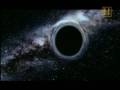


Los Agujeros Negros, constituyen una región del espacio cuya enorme densidad, provocada por una gran concentración de masa en su interior, genera un campo gravitatorio tal que ninguna partícula material, ni siquiera la luz, puede escapar de ella. Sin embargo, los agujeros negros pueden ser capaces de emitir radiación de rayos X, lo cual fue conjeturado por Stephen Hawking en los años 1970 y demostrado en 1976 con el descubrimiento de Cygnus X-1. La gravedad de un agujero negro, o «curvatura del espacio-tiempo», provoca una singularidad envuelta por una superficie cerrada, llamada horizonte de sucesos. Esto es previsto por las ecuaciones de campo de Einstein.
Se conjetura que en el centro de la mayoría de las galaxias, entre ellas la Vía Láctea, hay agujeros negros supermasivos. La existencia de agujeros negros está apoyada en observaciones astronómicas, en especial a través de la emisión de rayos X por estrellas binarias y galaxias activas.
Suscribirse a:
Entradas (Atom)


