






Mostrando entradas con la etiqueta Physical Chemistry. Mostrar todas las entradas
Mostrando entradas con la etiqueta Physical Chemistry. Mostrar todas las entradas



Physical Chemistry - Third Edition by Robert G. Mortimer
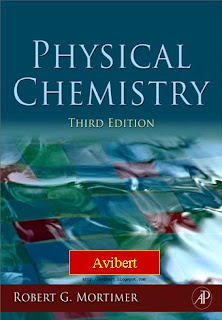
Table of Contents
Part 1 Thermodynamics and the Macroscopic Description of Physical Systems
Chapter 1 The Behavior of Gases and Liquids
Chapter 2 Work, Heat, and Energy: The First Law of Thermodynamics
Chapter 3 The Second and Third Laws of Thermodynamics: Entropy
Chapter 4 The Thermodynamics of Real Systems
Chapter 5 Phase Equilibrium
Chapter 6 The Thermodynamics of Solutions
Chapter 7 Chemical Equilibrium
Chapter 8 The Thermodynamics of Electrochemical Systems
Part 2 Dynamics
Chapter 9 Gas Kinetic Theory: The Molecular Theory of Dilute Gases at Equilibrium
Chapter 10 Transport Processes
Chapter 11 The Rates of Chemical Reactions
Chapter 12 Chemical Reaction Mechanisms I: Rate Laws and Mechanisms
Chapter 13 Chemical Reaction Mechanisms II: Catalysis and Miscellaneous Topics
Part 3 The Molecular Nature of Matter
Chapter 14 Classical Mechanics and the Old Quantum Theory
Chapter 15 The Principles of Quantum Mechanics. I. De BroglieWaves and the Schrödinger Equation
Chapter 16 The Principles of Quantum Mechanics. II. The Postulates of Quantum Mechanics
Chapter 17 The Electronic States of Atoms. I. The Hydrogen Atom
Chapter 18 The Electronic States ofAtoms. II.The Zero-OrderApproximation for Multielectron Atoms
Chapter 19 The Electronic States of Atoms. III. Higher-Order Approximations
Chapter 20 The Electronic States of Diatomic Molecules
Chapter 21 The Electronic Structure of Polyatomic Molecules
Chapter 22 Translational, Rotational, and Vibrational States of Atoms and Molecules
Chapter 23 Optical Spectroscopy and Photochemistry
Chapter 24 Magnetic Resonance Spectroscopy
Part 4 The Reconciliation of the Macroscopic and Molecular
Theories of Matter
Chapter 25 Equilibrium Statistical Mechanics I. The Probability Distribution for Molecular States
Chapter 26 Equilibrium Statistical Mechanics. II. Statistical Thermodynamics
Chapter 27 Equilibrium Statistical Mechanics. III. Ensembles
Chapter 28 The Structure of Solids, Liquids, and Polymers
Appendices

The Properties of Gases and Liquids by Poling, Prausnitz and O’Connell
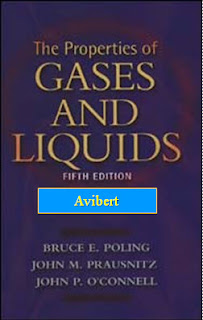
Table of Content
Chapter 1
The Estimation of Physical Properties
Chapter 2
Pure Component Constants
Chapter 3
Thermodynamic Properties of Ideal Gases
Chapter 4
Pressure - Volume - Temperature Relationships of Pure Gases and Liquids
Chapter 5
Pressure - Volume - Temperature Relationships of Mixtures
Chapter 6
Thermodynamic Properties of Pure Components and Mixtures
Chapter 7
Vapor Pressures and Enthalpies of Vaporization of Pure Fluids
Chapter 8
Fluid Phase Equilibria in Multicomponent Systems
Chapter 9
Viscosity
Chapter 10
Thermal Conductivity
Chapter 11
Diffusion Coefficients
Chapter 12
Surface Tension
Chemical Biophysics Quantitative Analysis of Cellular Systems

Contents
Part I Background material
1 Concepts from physical chemistry
2 Conventions and calculations for biochemical systems
3 Chemical kinetics and transport processes
Part II Analysis and modeling of biochemical systems
4 Enzyme-catalyzed reactions
5 Biochemical signaling modules
6 Biochemical reaction networks
7 Coupled biochemical systems and membrane transport
Part III Special topics
8 Spatially distributed systems and reaction–diffusion modeling
9 Constraint-based analysis of biochemical systems
10 Biomacromolecular structure and molecular association
11 Stochastic biochemical systems and the chemical master equation
12 Appendix: the statistical basis of thermodynamics
Physical Chemistry Paul Monk

Contents
1 Introduction to physical chemistry
1.1 What is physical chemistry: variables, relationships and laws
1.2 The practice of thermodynamic measurement
1.3 Properties of gases and the gas laws
1.4 Further thoughts on energy
2 Introducing interactions and bonds
2.1 Physical and molecular interactions
2.2 Quantifying the interactions and their influence
2.3 Creating formal chemical bonds
3 Energy and the first law of thermodynamics
3.1 Introduction to thermodynamics: internal energy
3.2 Enthalpy
3.3 Indirect measurement of enthalpy
4 Reaction spontaneity and the direction of thermodynamic change
4.1 The direction of physicochemical change: entropy
4.2 The temperature dependence of entropy
4.3 Introducing the Gibbs function
4.4 The effect of pressure on thermodynamic variables
4.5 Thermodynamics and the extent of reaction
4.6 The effect of temperature on thermodynamic variables
5 Phase equilibria
5.1 Energetic introduction to phase equilibria
5.2 Pressure and temperature changes with a single-component system: qualitative discussion
5.3 Quantitative effects of pressure and temperature change for a
single-component system
5.4 Phase equilibria involving two-component systems: partition
5.5 Phase equilibria and colligative properties
5.6 Phase equilibria involving vapour pressure
6 Acids and Bases
6.1 Properties of Lowry–Brønsted acids and bases
6.2 ‘Strong’ and ‘weak’ acids and bases
6.3 Titration analyses
6.4 pH buffers
6.5 Acid–base indicators
7 Electrochemistry
7.1 Introduction to cells: terminology and background
7.2 Introducing half-cells and electrode potentials
7.3 Activity
7.4 Half-cells and the Nernst equation
7.5 Concentration cells
7.6 Transport phenomena
7.7 Batteries
8 Chemical kinetics
8.1 Kinetic definitions
8.2 Qualitative discussion of concentration changes
8.3 Quantitative concentration changes: integrated rate equations
8.4 Kinetic treatment of complicated reactions
8.5 Thermodynamic considerations: activation energy, absolute reaction rates and catalysis
9 Physical chemistry involving light: spectroscopy and photochemistry
9.1 Introduction to photochemistry
9.2 Photon absorptions and the effect of wavelength
9.3 Photochemical and spectroscopic selection rules
9.4 Photophysics: emission and loss processes
9.5 Other optical effects
10 Adsorption and surfaces, colloids and micelles
10.1 Adsorption and definitions
10.2 Colloids and interfacial science
10.3 Colloid stability
10.4 Association colloids: micelles
1.1 What is physical chemistry: variables, relationships and laws
1.2 The practice of thermodynamic measurement
1.3 Properties of gases and the gas laws
1.4 Further thoughts on energy
2 Introducing interactions and bonds
2.1 Physical and molecular interactions
2.2 Quantifying the interactions and their influence
2.3 Creating formal chemical bonds
3 Energy and the first law of thermodynamics
3.1 Introduction to thermodynamics: internal energy
3.2 Enthalpy
3.3 Indirect measurement of enthalpy
4 Reaction spontaneity and the direction of thermodynamic change
4.1 The direction of physicochemical change: entropy
4.2 The temperature dependence of entropy
4.3 Introducing the Gibbs function
4.4 The effect of pressure on thermodynamic variables
4.5 Thermodynamics and the extent of reaction
4.6 The effect of temperature on thermodynamic variables
5 Phase equilibria
5.1 Energetic introduction to phase equilibria
5.2 Pressure and temperature changes with a single-component system: qualitative discussion
5.3 Quantitative effects of pressure and temperature change for a
single-component system
5.4 Phase equilibria involving two-component systems: partition
5.5 Phase equilibria and colligative properties
5.6 Phase equilibria involving vapour pressure
6 Acids and Bases
6.1 Properties of Lowry–Brønsted acids and bases
6.2 ‘Strong’ and ‘weak’ acids and bases
6.3 Titration analyses
6.4 pH buffers
6.5 Acid–base indicators
7 Electrochemistry
7.1 Introduction to cells: terminology and background
7.2 Introducing half-cells and electrode potentials
7.3 Activity
7.4 Half-cells and the Nernst equation
7.5 Concentration cells
7.6 Transport phenomena
7.7 Batteries
8 Chemical kinetics
8.1 Kinetic definitions
8.2 Qualitative discussion of concentration changes
8.3 Quantitative concentration changes: integrated rate equations
8.4 Kinetic treatment of complicated reactions
8.5 Thermodynamic considerations: activation energy, absolute reaction rates and catalysis
9 Physical chemistry involving light: spectroscopy and photochemistry
9.1 Introduction to photochemistry
9.2 Photon absorptions and the effect of wavelength
9.3 Photochemical and spectroscopic selection rules
9.4 Photophysics: emission and loss processes
9.5 Other optical effects
10 Adsorption and surfaces, colloids and micelles
10.1 Adsorption and definitions
10.2 Colloids and interfacial science
10.3 Colloid stability
10.4 Association colloids: micelles
Suscribirse a:
Entradas (Atom)
