
Bienvenidos en chino
Mobbing-acoso laboral-IRG
Mostrando entradas con la etiqueta ACS. Mostrar todas las entradas

Electrodeposition of Si, Ti, and W A New Concept of Molten Salt Systems

Abstracts


This Account describes the results of the electrodeposition of film-like Si, Ti, and W by utilizing molten salts selected based on a new concept. The proposed molten salt systems, KF–KCl and CsF–CsCl, have high fluoride ion concentrations, relatively low operating temperatures, and high solubility in water.

First, KF–KCl molten salt was used for the electrodeposition of crystalline Si films to establish a new fabrication method for Si solar cell substrates. The electrodeposition of Si films from the molten salt at 923 and 1023 K was successfully achieved using K2SiF6 or SiCl4 as the Si ion source. The crystal grain size of Si was larger at higher temperatures, indicating that higher temperatures are advantageous for the application of Si solar cell substrates. The resulting Si films underwent photoelectrochemical reactions. Second, the electrodeposition of Ti films using the KF–KCl molten salt was investigated to easily impart the properties of Ti, such as high corrosion resistance and biocompatibility, to various substrates. Ti films with a smooth surface were obtained from the molten salt containing Ti(III) ions at 923 K. Electrochemical tests in artificial seawater revealed that the electrodeposited Ti films had no voids and cracks and that the obtained Ti-coated Ni plate had a high corrosion resistance against seawater. Finally, the molten salts were used for the electrodeposition of W films, which are expected to be used as diverter materials for nuclear fusion. Although the electrodeposition of W films was successful in the KF–KCl–WO3 molten salt at 923 K, the surface of the films was rough. Therefore, we used the CsF–CsCl–WO3 molten salt, which can be employed at lower temperatures than KF–KCl–WO3. We then successfully electrodeposited W films with a mirror-like surface at 773 K. Such a mirror-like metal film deposition has not been reported before using high-temperature molten salts. Further, the temperature dependence of the crystal phase of W was revealed by the electrodeposition of W films at 773–923 K. β-W was obtained at 773 and 823 K, α-W was obtained at 923 K, and a mixed phase of α- and β-W was obtained at 873 K. In addition, single-phase β-W films with a thickness of approximately 30 μm were electrodeposited, which has not been reported before.

The results show that our proposed molten salt systems are advantageous for electroplating Si, Ti, and W. Our approach is also expected to be applicable for the electrodeposition of other metals such as Zr, Nb, Mo, Hf, and Ta.

A New Concept of Molten Salt Systems for the Electrodeposition of Si, Ti, and W
Yutaro Norikawa and Toshiyuki Nohira
Accounts of Chemical Research Article ASAP
DOI: 10.1021/acs.accounts.2c00855

Source: ACS Publications

The Bend + Libration Combination Band Is an Intrinsic, Collective, and Strongly Solute-Dependent Reporter on the Hydrogen Bonding Network of Liquid Water


Citations: J. Phys. Chem. B 122, 9, 2587-2599

Water is an extensively self-associated liquid due to its extensive hydrogen bond (H-bond) forming ability. The resulting H-bonded network fluid exhibits nearly continuous absorption of light from the terahertz to the near-IR region.

The relatively weak bend+libration water combination band (centered at 2130 cm–1) has been largely overlooked as a reporter of liquid water’s structure and dynamics despite its location in a convenient region of the IR for spectroscopic study. The intermolecular nature of the combination band leads to a unique absorption signal that reports collectively on the rigidity of the H-bonding network in the presence of many different solutes. This study reports comprehensively how the combination band acts as an intrinsic and collective probe in various chemically and biologically relevant solutions, including salts of varying character, denaturants, osmolytes, crowders, and surfactants that form reverse micelles and micelles. While we remark on changes in the line width and intensity of this combination band, we mainly focus on the frequency and how the frequency reports on the collective H-bonding network of liquid water.

We also comment on the “association band” moniker often applied to this band and how to evaluate discrete features in this spectral region that sometimes appear in the IR spectra of specific kinds of aqueous samples of organic solutes, especially those with very high solute concentrations, with the conclusion that most of these discrete spectral features come exclusively from the solutes and do not report on the water. Contrasts are drawn throughout this work between the collective and delocalized reporting ability of the combination band and the response of more site-specific vibrations like the much-investigated OD stretch of HDO in H2O: the combination band is a unique reporter of H-bonding structure and dynamics and fundamentally different than any local mode probe.

Since this band appears as the spectroscopic “background” for many local-mode reporter groups, we note the possibility of observing both local and collective solvent dynamics at the same time in this spectral region.

Fuente: ACS Publications

High Throughput Screening Method for Systematic Surveillance of Drugs of Abuse by Multisegment Injection–Capillary Electrophoresis–Mass Spectrometry


AutoresAlicia DiBattista†, Dianne Rampersaud‡, Howard Lee‡, Marcus Kim§, and Philip Britz-McKibbin*†
† Department of Chemistry and Chemical Biology, McMaster University, Hamilton L8S 4L8, Canada
‡ Seroclinix Corporation, Mississauga, ON L4W 5B9, Canada
§ Agilent Technologies Inc., Mississauga, ON L5N 5M4, Canada
*E-mail: britz@mcmaster.ca.

Abstract
New technologies are urgently required for reliable drug screening given a worldwide epidemic of prescription drug abuse and its devastating socioeconomic impacts on public health. Primary screening of drugs of abuse (DoA) currently relies on immunoassays that are prone to bias and are not applicable to detect an alarming array of psychoactive stimulants, tranquilizers, and synthetic opioids. These limitations impact patient safety when monitoring for medication compliance, drug substitution, or misuse/abuse and require follow-up confirmatory testing by more specific yet lower throughput instrumental methods. Herein, we introduce a high throughput platform for nontargeted screening of a broad spectrum of DoA and their metabolites based on multisegment injection–capillary electrophoresis–mass spectrometry (MSI–CE–MS). We demonstrate that MSI–CE–MS enables serial injections of 10 samples within a single run (<3 min/sample) where multiplexed electrophoretic separations are coupled to high resolution MS with full-scan data acquisition. Unambiguous drug identification was achieved by four or more independent parameters, including comigration with a deuterated internal standard or in silico prediction of electromigration behavior together with accurate mass, most likely molecular formula, as well as MS/MS as required for confirmation testing. Acceptable precision was demonstrated for over 50 DoA at 3 concentration levels over 4 days (median coefficient of variance = 13%, n = 117) with minimal ion suppression, isobaric interferences, and sample carry-over (<1%). This approach offers a rapid yet accurate method for simultaneous detection and identification of DoA at their recommended screening cutoff levels in human urine while allowing for systematic surveillance, specimen verification, and retrospective testing of designer drugs that elude conventional drug tests.

Read more: ACS Pubs

Singlet–Triplet Gaps
through Incremental Full Configuration Interaction ACS Publications


CitationSinglet–Triplet Gaps through Incremental Full Configuration Interaction
Paul M. Zimmerman (paulzim@umich.edu)
The Journal of Physical Chemistry A Article ASAP
DOI: 10.1021/acs.jpca.7b03998

The method of increments is herein applied to produce accurate singlet–triplet gaps in a variety of challenging polyatomic systems involving main group elements. This strategy computes incremental Full Configuration Interaction (iFCI) energies for the two spin states in a size-extensive n-body expansion. iFCI avoids exponential costs when n is small and thus is dependent on choice of reference function to maintain good accuracy at polynomial cost. The new algorithm presented in this article therefore employs a high-spin perfect pairing reference to capture the major qualities of the singlet and triplet wave functions at n = 0. Systematic studies will show that singlet–triplet gap predictions approach 1 kcal/mol accuracy at small n (n ≤ 3) compared with available experimental and high-level theoretical values.

Go to: ACS Publications

Simulating Gas–Liquid−Water Partitioning and Fluid Properties of Petroleum under Pressure
Implications for Deep-Sea Blowouts


With the expansion of offshore petroleum extraction, validated models are needed to simulate the behaviors of petroleum compounds released in deep (>100 m) waters.

We present a thermodynamic model of the densities, viscosities, and gas–liquid−water partitioning of petroleum mixtures with varying pressure, temperature, and composition based on the Peng–Robinson equation-of-state and the modified Henry’s law (Krychevsky−Kasarnovsky equation). The model is applied to Macondo reservoir fluid released during the Deepwater Horizon disaster, represented with 279–280 pseudocomponents, including 131–132 individual compounds. We define >n-C8 pseudocomponents based on comprehensive two-dimensional gas chromatography (GC × GC) measurements, which enable the modeling of aqueous partitioning for n-C8 to n-C26 fractions not quantified individually. Thermodynamic model predictions are tested against available laboratory data on petroleum liquid densities, gas/liquid volume fractions, and liquid viscosities. We find that the emitted petroleum mixture was ∼29–44% gas and ∼56–71% liquid, after cooling to local conditions near the broken Macondo riser stub (∼153 atm and 4.3 °C). High pressure conditions dramatically favor the aqueous dissolution of C1−C4 hydrocarbons and also influence the buoyancies of bubbles and droplets. Additionally, the simulated densities of emitted petroleum fluids affect previous estimates of the volumetric flow rate of dead oil from the emission source.

Simulating Gas–Liquid−Water Partitioning and Fluid Properties of Petroleum under Pressure: Implications for Deep-Sea Blowouts
Jonas Gros, Christopher M. Reddy, Robert K. Nelson, Scott A. Socolofsky, and J. Samuel Arey Environmental Science & Technology Article ASAP
DOI: 10.1021/acs.est.5b04617

Fuente: ACS Publications

Light Absorption Properties and Radiative Effects of Primary Organic Aerosol Emissions


Light Absorption Properties and Radiative Effects of Primary Organic Aerosol Emissions
Zifeng Lu, David G. Streets, Ekbordin Winijkul, Fang Yan, Yanju Chen, Tami C. Bond, Yan Feng, Manvendra K. Dubey, Shang Liu, Joseph P. Pinto, and Gregory R. Carmichael
Environmental Science & Technology Article ASAP
DOI: 10.1021/acs.est.5b00211

Organic aerosols (OAs) in the atmosphere affect Earth’s energy budget by not only scattering but also absorbing solar radiation due to the presence of the so-called “brown carbon” (BrC) component.

However, the absorptivities of OAs are not represented or are poorly represented in current climate and chemical transport models. In this study, we provide a method to constrain the BrC absorptivity at the emission inventory level using recent laboratory and field observations.

We review available measurements of the light-absorbing primary OA (POA), and quantify the wavelength-dependent imaginary refractive indices (kOA, the fundamental optical parameter determining the particle’s absorptivity) and their uncertainties for the bulk POA emitted from biomass/biofuel, lignite, propane, and oil combustion sources. In particular, we parametrize the kOA of biomass/biofuel combustion sources as a function of the black carbon (BC)-to-OA ratio, indicating that the absorptive properties of POA depend strongly on burning conditions.

The derived fuel-type-based kOA profiles are incorporated into a global carbonaceous aerosol emission inventory, and the integrated kOA values of sectoral and total POA emissions are presented. Results of a simple radiative transfer model show that the POA absorptivity warms the atmosphere significantly and leads to ∼27% reduction in the amount of the net global average POA cooling compared to results from the nonabsorbing assumption.

Ver más: ACS

Maze Solving Using Fatty Acid Chemistry ACS Publications

Maze Solving Using Fatty Acid Chemistry

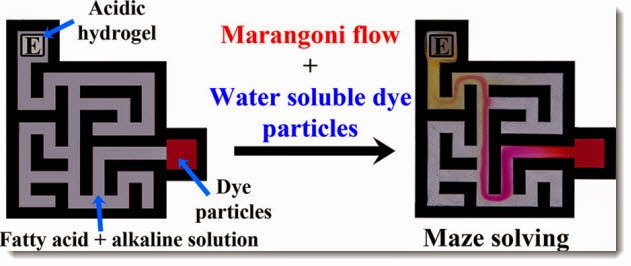
This study demonstrates that the Marangoni flow in a channel network can solve maze problems such as exploring and visualizing the shortest path and finding all possible solutions in a parallel fashion. The Marangoni flow is generated by the pH gradient in a maze filled with an alkaline solution of a fatty acid by introducing a hydrogel block soaked with an acid at the exit. The pH gradient changes the protonation rate of fatty acid molecules, which translates into the surface tension gradient at the liquid–air interface through the maze. Fluid flow maintained by the surface tension gradient (Marangoni flow) can drag water-soluble dye particles toward low pH (exit) at the liquid–air interface. Dye particles placed at the entrance of the maze dissolve during this motion, thus exhibiting and finding the shortest path and all possible paths in a maze.

Maze Solving Using Fatty Acid Chemistry
Kohta Suzuno, Daishin Ueyama, Michal Branicki, Rita Tóth, Artur Braun, and István Lagzi
Langmuir Article ASAP

Safer Salts For Solar-Cell Production Chemical and Engineering News
Matt Davenport

A magnesium salt may reduce the hazards and costs of making thin-film photovoltaic devices

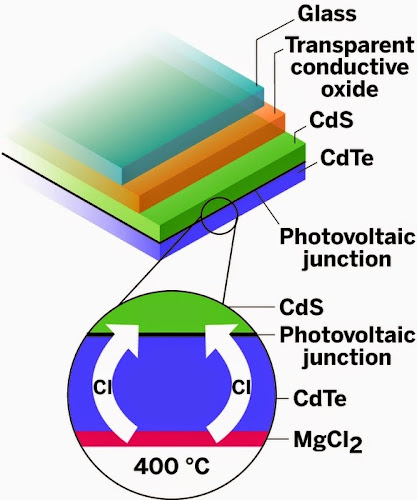
Substituting magnesium chloride for toxic cadmium chloride could free cadmium-telluride solar-cell manufacturers from a costly and hazardous process without sacrificing efficiency, according to a new study.

At the heart of a standard CdTe solar cell is a photovoltaic junction formed by the interface between neighboring thin layers of CdS and CdTe. Without processing the layers after deposition, a cell converts incident solar power into electric power with less than 5% efficiency. Manufacturers bump this up to between 10 and 20% using a junction activation step.

For more than two decades, activation has relied on CdCl2, usually deposited as a thin coating on the cell’s CdTe layer. When the cell is heated, chloride diffuses through its stacked structure and reforms the physical and electronic characteristics of the cadmium-containing layers, leaving a more efficient photovoltaic junction.

Read more...

Mussel-Inspired Direct Immobilization of Nanoparticles and Application for Oil–Water Separation
ACS Publications

Oil–Water Separation

Immobilization of various nanoparticles onto complex 2D or 3D macroscopic surface is an important issue for nanotechnology, but the challenge remains to explore a facile, general and environmentally friendly method for achieving this goal.

Taking inspiration from the adhesion of marine mussels, we reported here that oxide nanoparticles of different compositions and sizes were directly and robustly anchored on the surface of monolithic foams ranging from polymer to metals in an aqueous solution of dopamine.

The effective immobilization of the nanoparticles was strongly dependent on the oxidation of dopamine, which could be tuned by either pH or by adding n-dodecanethiol. Interestingly, the thiol addition not only allowed the immobilization to take place in a wide pH range, but also led to superhydrophobicity of the resulting foams. Application of the superhydrophobic foams was illustrated by fast and selective collecting oils from water surface. Because catecholic derivatives exhibit high affinity to a variety of substances, the present strategy might be extendable to fabricate hybrid nanomaterials desirable for self-cleaning, environmental protection, sensors and catalysts, and so forth.

Mussel-Inspired Direct Immobilization of Nanoparticles and Application for Oil–Water Separation
Qing Zhu and Qinmin Pan
ACS Nano 2014 8 (2), 1402-1409

Fuente: ACS Publications

Wearable Textile Battery Rechargeable by Solar Energy

Bateria de uso textil, recargable con energía solar

Wearable electronics represent a significant paradigm shift in consumer electronics since they eliminate the necessity for separate carriage of devices. In particular, integration of flexible electronic devices with clothes, glasses, watches, and skin will bring new opportunities beyond what can be imagined by current inflexible counterparts. Although considerable progresses have been seen for wearable electronics, lithium rechargeable batteries, the power sources of the devices, do not keep pace with such progresses due to tenuous mechanical stabilities, causing them to remain as the limiting elements in the entire technology.

Herein, we revisit the key components of the battery (current collector, binder, and separator) and replace them with the materials that support robust mechanical endurance of the battery. The final full-cells in the forms of clothes and watchstraps exhibited comparable electrochemical performance to those of conventional metal foil-based cells even under severe folding–unfolding motions simulating actual wearing conditions. Furthermore, the wearable textile battery was integrated with flexible and lightweight solar cells on the battery pouch to enable convenient solar-charging capabilities.

Wearable Textile Battery Rechargeable by Solar Energy
Yong-Hee Lee, Joo-Seong Kim, Jonghyeon Noh, Inhwa Lee, Hyeong Jun Kim, Sunghun Choi, Jeongmin Seo, Seokwoo Jeon, Taek-Soo Kim, Jung-Yong Lee, and Jang Wook Choi
Nano Letters 2013 13 (11), 5753-5761

Ref:

Fabrication of Ceramic Microspheres by Diffusion-Induced Sol–Gel Reaction in Double Emulsions


Abstract
We demonstrate an approach to prepare zirconium dioxide (ZrO2) microspheres by carrying out a diffusion-induced sol–gel reaction inside double emulsion droplets. A glass capillary microfluidic device is introduced to generate monodisperse water-in-oil-in-water (W/O/W) double emulsions with a zirconium precursor as the inner phase. By adding ammonia to the continuous aqueous phase, the zirconium precursor solution is triggered to gel inside the emulsions. The double emulsion structure enhances the uniformity in the rate of the sol–gel reaction, resulting in sol–gel microspheres with improved size uniformity and sphericity. ZrO2 ceramic microspheres are formed following subsequent drying and sintering steps. Our approach, which combines double-emulsion-templating and sol–gel synthesis, has great potential for fabricating versatile ceramic microspheres for applications under high temperature and pressure.

Fabrication of Ceramic Microspheres by Diffusion-Induced Sol–Gel Reaction in Double Emulsions
Lei Zhang, Shaochang Hao, Bing Liu, Ho Cheung Shum, Jiang Li, and Haosheng Chen
ACS Applied Materials & Interfaces 2013 5 (22), 11489-11493

Ref:

Activation of Snap-Top Capped Mesoporous Silica Nanocontainers Using Two Near-Infrared Photons


Photoactivation of “snap-top” stoppers over the pore openings of mesoporous silica nanoparticles releases intact cargo molecules from the pores. The on-command release can be stimulated by either one UV photon or two coherent near-IR photons.

Two-photon activation is particularly desirable for use in biological systems because it enables good tissue penetration and precise spatial control. Stoppers were assembled by first binding photolabile coumarin-based molecules to the nanoparticle surface. Then, after the particles were loaded with cargo, bulky β-cyclodextrin (CD) molecules were noncovalently associated with the substituted coumarin molecule, blocking the pores and preventing the cargo from escaping. One-photon excitation at 376 nm or two-photon excitation at 800 nm cleaves the bond holding the coumarin to the nanopore, releasing both the CD cap and the cargo. The dynamics of both the cleavage of the cap and the cargo release was monitored using fluorescence spectroscopy. This system traps intact cargo molecules without the necessity of chemical modification, releases them with tissue-penetrating near-IR light, and has possible applications in photostimulated drug delivery.

Activation of Snap-Top Capped Mesoporous Silica Nanocontainers Using Two Near-Infrared Photons
Tania M. Guardado-Alvarez, Lekshmi Sudha Devi, Melissa M. Russell, Benjamin J. Schwartz, and Jeffrey I. Zink
Journal of the American Chemical Society 2013 135 (38), 14000-14003

Fuente: ACS Publications

Harvesting Energy from CO2 Emissions ACS Publications


When two fluids with different compositions are mixed, mixing energy is released. This holds true for both liquids and gases, though in the case of gases, no technology is yet available to harvest this energy source. Mixing the CO2 in combustion gases with air represents a source of energy with a total annual worldwide capacity of 1570 TWh. To harvest the mixing energy from CO2-containing gas emissions, we use pairs of porous electrodes, one selective for anions and the other selective for cations. We demonstrate that when an aqueous electrolyte, flushed with either CO2 or air, alternately flows between these selective porous electrodes, electrical energy is gained. The efficiency of this process reached 24% with deionized water as the aqueous electrolyte and 32% with a 0.25 M monoethanolamine (MEA) solution as the electrolyte. The highest average power density obtained with a MEA solution as the electrolyte was 4.5 mW/m2, significantly higher than that with water as the electrolyte (0.28 mW/m2).

Harvesting Energy from CO2 Emissions
H. V. M. Hamelers, O. Schaetzle, J. M. Paz-García, P. M. Biesheuvel, and C. J. N. Buisman
Environmental Science & Technology Letters Article ASAP

Fuente: ACS Publications

Fractales de Bacterias Timothy J. Rudge , Fernán Federici , Paul J. Steiner , Anton Kan , and Jim Haseloff


As a model system to study physical interactions in multicellular systems, we used layers of Escherichia coli cells, which exhibit little or no intrinsic coordination of growth. This system effectively isolates the effects of cell shape, growth, and division on spatial self-organization. Tracking the development of fluorescence-labeled cellular domains, we observed the emergence of striking fractal patterns with jagged, self-similar shapes. We then used a large-scale, cellular biophysical model to show that local instabilities due to polar cell-shape, repeatedly propagated by uniaxial growth and division, are responsible for generating this fractal geometry. Confirming this result, a mutant of E. coli with spherical shape forms smooth, nonfractal cellular domains. These results demonstrate that even populations of relatively simple bacterial cells can possess emergent properties due to purely physical interactions. Therefore, accurate physico-genetic models of cell growth will be essential for the design and understanding of genetically programmed multicellular systems.

Cell Polarity-Driven Instability Generates Self-Organized, Fractal Patterning of Cell Layers
Timothy J. Rudge, Fernán Federici, Paul J. Steiner, Anton Kan, and Jim Haseloff
ACS Synthetic Biology Article ASAP

Fuente: ACS Publications

Be More Unfocused Innovations that come from a Broader Scientific Perspective

Click on image

What you're missing can be more important than what you're looking for when it comes to scientific research. Discover what innovations can come from having a broader scientific perspective with this video featuring leading researchers at the interface of chemistry and biology.

Fuente:

Sunlight-Induced Self-Healing of a Microcapsule Type Protective Coating


Abstract
Photopolymerization behavior of a methacryloxypropyl-terminated polydimethylsiloxane (MAT-PDMS) healing agent was investigated in the presence of benzoin isobutyl ether (BIE) photoinitiator by Fourier transform infrared (FT-IR) spectroscopy. MAT-PDMS and BIE were microencapsulated with urea-formaldehyde polymer. The surface and shell morphology of the microcapsules was investigated by scanning electron microscopy (SEM). Mean diameter and size distribution of the microcapsules could be controlled by agitation rate. A coating matrix formulation was prepared by sol–gel reaction of tetraethyl orthosilicate (TEOS) in the presence of a polysiloxane and by subsequent addition of an adhesion promoter. The formulation and microcapsules were mixed to give a self-healing coating formulation, which was then sprayed to surface of cellulose-fiber-reinforced-cement (CRC) board or mortar. Contact angle measurements showed that both the polymerized MAT-PDMS and the prepared coating matrix are hydrophobic, and the coating matrix has good wettability with MAT-PDMS. It was confirmed by optical microscopy and SEM that, when the self-healing coating is damaged, the healing agent is released from ruptured microcapsules and fills the damaged region. The self-healing coating was evaluated as protective coating for mortar, and it was demonstrated by water permeability and chloride ion penetration tests that our system has sunlight-induced self-healing capability. Our self-healing coating is the first example of capsule-type photoinduced self-healing system, and offers the advantages of catalyst-free, environmentally friendly, inexpensive, practical healing.

Sunlight-Induced Self-Healing of a Microcapsule-Type Protective Coating
Young-Kyu Song, Ye-Hyun Jo, Ye-Ji Lim, Sung-Youl Cho, Hwan-Chul Yu, Byung-Cheol Ryu, Sang-In Lee, and Chan-Moon Chung
ACS Applied Materials & Interfaces 2013 5 (4), 1378-1384

Ref:

Solar Vapor Generation Enabled by Nanoparticles O. Neumann, A. S. Urban, J. Day, S. Lal, P. Nordlander, and N. J. Halas
ACSNANO - Article ASAP

Schematic of nanoparticle-enabled solar steam generation: initially, light is absorbed by nanoparticles, raising their surface temperature above the boiling point of the fluid. The nanoparticle surface serves as a boiling nucleation site. Vapor is formed around the nanoparticle surface, and the complex moves to the liquid air interface, where the steam is released. New liquid is replenished at the hot nanoparticle surface, and the process is repeated.
Abstract
Solar illumination of broadly absorbing metal or carbon nanoparticles dispersed in a liquid produces vapor without the requirement of heating the fluid volume. When particles are dispersed in water at ambient temperature, energy is directed primarily to vaporization of water into steam, with a much smaller fraction resulting in heating of the fluid. Sunlight-illuminated particles can also drive H2O ethanol distillation, yielding fractions significantly richer in ethanol content than simple thermal distillation. These phenomena can also enable important compact solar applications such as sterilization of waste and surgical instruments in resource-poor locations.

Fuente: