Bienvenidos en chino
Mobbing-acoso laboral-IRG
Mostrando entradas con la etiqueta Ebooks of Mathematics. Mostrar todas las entradas

Métodos numéricos Introducción, aplicaciones y propagación
Cerezuelo - Ramos - Ferrán

Métodos numéricos

Tabla de Contenidos
1. Introducción al uso de ordenadores
2. Introducción a los sistemas operativos
3. Introducción a la programación Fortran
4. Número, algoritmo y errores
5. Ceros de funciones
6. Una introducción a los métodos gaussianos para sistemas lineales de ecuaciones
7. Programación y aspectos computacionales de los sistemas lineales de ecuaciones
8. Aplicaciones al cálculo integral
9. Aplicaciones al cálculo diferencial
10. Resolución de los problemas propuestos

Fundamentals of Algebraic Modeling, 5ed Daniel l. Timmons - Catherine W. Johnson - Sonya M. Mccook

Fundamentals of Algebraic Modeling

Table of Contents
1. A review of algebra fundamentals
2. Graphing
3. Functions
4. Mathematical models in consumer math
5. Additional applications of algebraic modeling
6. Modeling with systems of equations
7. Probability models
8. Modeling with statistics
Appendix I
Commonly Used Calculator Key
Calculator Practice
Appendix II
Formulas Used in This Text
Appendix III
Levels of Data in Statistic

The Heart of Mathematics An invitation to effective thinking 3ed
Edward B. Burger ♦ Michael Starbird

The heart of Mathematics

Table of Contents
1. Fun and Games: An introduction to rigorous thought
2. Number Contemplation
3. Infinity
4. Geometric Gems
5. Contortions of Space
6. Fractals and Chaos
7. Taming Uncertainty
8. Meaning from Data
9. Deciding Wisely: Applications of Rigorous Thinking

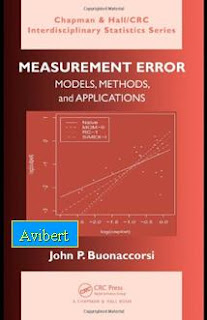
Measurement Error Models, Methods and Applications
by John P. Buonaccorsi

Measurement Error

Table of Contents
1 Introduction
2 Misclassification in Estimating a Proportion
3 Misclassification in Two-Way Tables
4 Simple Linear Regression
5 Multiple Linear Regression
6 Measurement Error in Regression: A General Overview
7 Binary Regression
8 Linear Models with Nonadditive Error
9 Nonlinear Regression
10 Error in the Response
11 Mixed/Longitudinal Models
12 Time Series
13 Background Material

Calculus 11th Edition by B. Thomas, D. Weir, Hass, R. Giordano

Calculus 11th Edition

Table of Contents
1. Preliminaries
2. Limits and Derivatives
3. Differentiation
4. Applications of Derivatives
5. Integration
6. Applications of Definite Integrals
7. Transcendental Functions
8. Techniques of Integration
9. Further Applications of Integration
10. Conic Sections and Polar Coordinates
11. Infinite Sequences and Series
12. Vectors and the Geometry of Space
13. Vector-Valued Functions and Motion in Space
14. Partial Derivatives
15. Multiple Integrals
16. Integration in Vector Fields
Appendices

Cálculo Diferencial e Integral por Frank Ayres, Jr.

Cálculo Diferencial e Integral

A pedido de Erika.

Tabla de Contenidos
Capítulo 1: Variable y funciones.
Capítulo 2: Límites.
Capítulo 3: Continuidad.
Capítulo 4: Derivada.
Capítulo 5: Derivación de funciones algebraicas.
Capítulo 6: Derivación de funciones implícitas.
Capítulo 7: Tangete y normal.
Capítulo 8: Máximos y Mínimos.
Capítulo 9: Problemas de aplicación de máximos y mínimos.
Capítulo 10: Movimiento rectilinio y circular.
Capítulo 11:Variaciones con respecto al tiempo.
Capítulo 12:Derivada de las funciones trigonometricas.
Capítulo 13:Derivada de las funciones trigonometricas inversa.
Capítulo 14: Derivada de las funciones exponenciales, logarítmicas e hiperbólicas.
Capítulo 15: Derivada de las funciones hiperbólicas.
Capítulo 16: Representación de curvas en forma parametrica.
Capítulo 17: Curvatura.
Capítulo 18: Vectores en el plano.
Capítulo 19: Movimiento circulineo.
Capítulo 20: Coordenadas Polares.
Capítulo 21: Teoremas del valor medio.
Capítulo 22: Formas indeterminadas.
Capítulo 23: Diferenciales.
Capítulo 24: Trazado de curvas.
Capítulo 25: Formulas fundamentales de integración.
Capítulo 26: Integración por partes.
Capítulo 27: Integrales trigonométricas.
Capítulo 28: Cambios de variables trigonométricos.
Capítulo 29: Integración por descomposición en fracciones simples.
Capítulo 30: Diversos cambios de variable.
Capítulo 31: Integración de funciones hiperbólicas.
Capítulo 32: Aplicaciones de las integrales indefinidas.
Capítulo 33: Integral definida.
Capítulo 34: Cálculo de areas planas por integración.
Capítulo 35: Volumenes de sólidos de revolución.
Capítulo 36: Volumenes de sólidos de sección conocida.
Capítulo 37: Centro geométrico – areas planas y sólidos de revolución.
Capítulo 38: Momento de inercia – areas planas y sólidos de revolución.
Capítulo 39: Presión de los fluidos.
Capítulo 40: Trabajo mecánico.
Capítulo 41: Longitud de un arco.
Capítulo 42: Área de la superficie de revolución.
Capítulo 43: Centro geométrico y momento de inercia – arcos y superficies de revolución.
Capítulo 44: Área plana y centro geométrico de un área – coordenas polares.
Capítulo 45: Longitud y centro geométrico de un arco – área de una superficie de revolución – superficies polares.
Capítulo 46: Integrales impropias.
Capítulo 47: Sucesiones y series.
Capítulo 48: Criterios de convergencia y divergencia de las series de términos positivos.
Capítulo 49: Series de términos negativos.
Capítulo 50: Álgebra de las series.
Capítulo 51: Series de potencias.
Capítulo 52: Desarrollo en serie de potencias.
Capítulo 53: Fórmulas de Mclaurin y Taylor con restos.
Capítulo 54: Cálculos con series de potencias.
Capítulo 55: Integración aproximada.
Capítulo 56: Derivadas parciales.
Capítulo 57: Diferenciales y derivadas totales.
Capítulo 58: Funciones implícitas.
Capítulo 59: Curvas y superficies en el espacio.
Capítulo 60: Derivadas según una dirección – máximos y mínimos.
Capítulo 61: Vectores en el espacio.
Capítulo 62: Derivación e integración vectorial.
Capítulo 63: Integrales doble e iterada.
Capítulo 64: Centro geométrico y momentos de inercia de áreas planas – integral doble.
Capítulo 65: Volumen limitado por una superficie – integral doble.
Capítulo 66: Area de una superficie – Integral doble.
Capítulo 67: Integral Triple.
Capítulo 68: Cuerpos de densidad variable.
Capítulo 69: Ecuaciones diferenciales.
Capítulo 70: Ecuaciones diferenciales de segundo orden.

Linear Algebra for Dummies by Mary Jane Sterling

Linear Algebra for Dummies

Contents at a Glance
Part I: Lining Up the Basics of Linear Algebra
Chapter 1: Putting a Name to Linear Algebra
Chapter 2: The Value of Involving Vectors
Chapter 3: Mastering Matrices and Matrix Algebra
Chapter 4: Getting Systematic with Systems of Equations
Part II: Relating Vectors and Linear Transformations
Chapter 5: Lining Up Linear Combinations
Chapter 6: Investigating the Matrix Equation Ax = b
Chapter 7: Homing In on Homogeneous Systems and Linear Independence
Chapter 8: Making Changes with Linear Transformations
Part III: Evaluating Determinants
Chapter 9: Keeping Things in Order with Permutations
Chapter 10: Evaluating Determinants
Chapter 11: Personalizing the Properties of Determinants
Chapter 12: Taking Advantage of Cramer’s Rule
Part IV: Involving Vector Spaces
Chapter 13: Involving Vector Spaces
Chapter 14: Seeking Out Subspaces of Vector Spaces
Chapter 15: Scoring Big with Vector Space Bases
Chapter 16: Eyeing Eigenvalues and Eigenvectors
Part V: The Part of Tens
Chapter 17: Ten Real-World Applications Using Matrices
Chapter 18: Ten (Or So) Linear Algebra Processes You Can Do on Your Calculator
Chapter 19: Ten Mathematical Meanings of Greek Letters

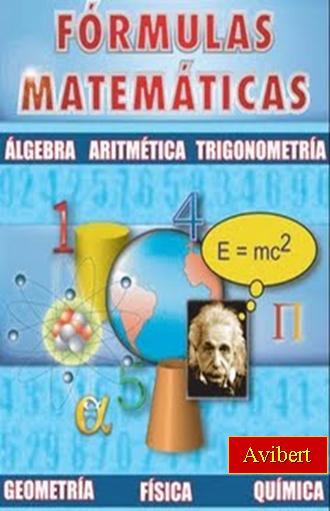
Fórmulas Matemáticas Compendio de métodos matemáticos

Fórmulas Matemáticas

Al igual que René Descartes, gran matemático y filósofo del siglo XVII, quien hubiera preferido una ciencia única o “matemática universal”, que explique el orden y la medida de la naturaleza, sin importar si la unidad de medida son números, o ecuaciones o gráficos, el presente "Formulario Matemático” pretende realizar una exposición de todos los métodos matemáticos en un solo documento.

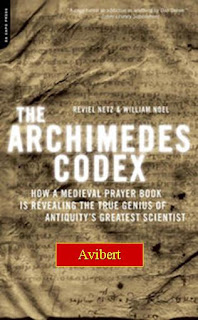
The Archimedes Codex by Reviel Netz and William Noel

The Archimedes Codex

How a Medieval Prayer Book Is Revealing the True Genius of Antiquity’s Greatest Scientist
Contents
1 Archimedes in America
2 Archimedes in Syracuse
3 The Great Race, Part 1: Before the Palimpsest
4 Visual Science
5 The Great Race, Part II:The History of the Palimpsest
6 Archimedes’ Method, 1999, or The Making of Science
7 The Critical Path
8 Archimedes’ Method, 2001, or Infinity Unveiled
9 The Digital Palimpsest
10 The Stomachion, 2003, or Archimedes at Play
11 New Light on an Old Subject
Epilogue:“The Vast Book of the Universe”

Partial Differential Equations by Emmanuele DiBenedetto

Partial Differential Equations

Contents
0 Preliminaries
1 Quasi-Linear Equations and the Cauchy–Kowalewski Theorem
2 The Laplace Equation
3 Boundary Value Problems by Double-Layer Potentials
4 Integral Equations and Eigenvalue Problems
5 The Heat Equation
6 The Wave Equation
7 Quasi-Linear Equations of First-Order
8 Non-Linear Equations of First-Order
9 Linear Elliptic Equations with Measurable Coefficients
10 DeGiorgi Classes

A to Z of Mathematicians Notable Scientists by Tucker Mcelroy, Ph.D.

A to Z of Mathematicians

List of Entries
Acknowledgments
Introduction
Entries A to Z
Entries by Field
Entries by Country of Birth
Entries by Country of Major Scientific Activity
Entries by Year of Birth
Chronology
Bibliography
Index

Álgebra Lineal Stanley I. Grossman - 2da. ed

Álgebra Lineal - Grossman

Pedido por Damarys. Saludos

Handbook of Mathematics for Engineers and Scientists Andrei D. Polyanin - Alexander V. Manzhirov

Mathematics for Engineers

Contents
Part I. Definitions, Formulas, Methods, and Theorems

1. Arithmetic and Elementary Algebra
1.1. Real Numbers
1.2. Equalities and Inequalities. Arithmetic Operations. Absolute Value
1.3. Powers and Logarithms
1.4. Binomial Theoremand Related Formulas
1.5. Arithmetic and Geometric Progressions. Finite Sums and Products
1.6. Mean Values and Inequalities of General Form
1.7. Some Mathematical Methods
References for Chapter 1
2. Elementary Functions
2.1. Power, Exponential, and Logarithmic Functions
2.2. Trigonometric Functions
2.3. Inverse Trigonometric Functions
2.4. Hyperbolic Function
2.5. InverseHyperbolic Functions
References for Chapter 2
3. Elementary Geometry
3.1. Plane Geometry
3.2. Solid Geometry
3.3. Spherical Trigonometry
References for Chapter 3
4. Analytic Geometry
4.1. Points, Segments, and Coordinates on Line and Plane
4.2. Curves on Plane
4.3. Straight Lines and Points on Plane
4.4. Second-Order Curves
4.5. Coordinates, Vectors, Curves, and Surfaces in Space
4.6. Line and Plane in Space
4.7. Quadric Surfaces (Quadrics)
References for Chapter 4
5. Algebra
5.1. Polynomials and Algebraic Equations
5.2. Matrices and Determinants
5.3. Linear Spaces
5.4. Euclidean Spaces
5.5. Systems of Linear Algebraic Equations
5.6. LinearOperators
5.7. Bilinear and Quadratic Forms
5.8. Some Facts fromGroup Theory
References for Chapter 5
6. Limits and Derivatives
6.1. Basic Concepts ofMathematicalAnalysis
6.2. DifferentialCalculus for Functions of a SingleVariable
6.3. Functions of SeveralVariables. PartialDerivatives
References for Chapter 6
7. Integrals
7.1. Indefinite Integral
7.2. Definite Integral
7.3. Double and Triple Integrals
7.4. Line and Surface Integrals
References for Chapter 7
8. Series
8.1. Numerical Series and Infinite Products
8.2. Functional Series
8.3. Power Series
8.4. Fourier Series
8.5. Asymptotic Series
References for Chapter 8
9. Differential Geometry
9.1. Theory of Curves
9.2. Theory of Surfaces
References for Chapter 9
10. Functions of Complex Variable
10.1. Basic Notions
10.2. Main Applications
References for Chapter 10
11. Integral Transforms
11.1. General Formof Integral Transforms. Some Formulas
11.2. Laplace Transform
11.3. Mellin Transform
11.4. Various Forms of the Fourier Transform
11.5. Other Integral Transforms
References for Chapter 11
12. Ordinary Differential Equations
12.1. First-Order Differential Equations
12.2. Second-Order Linear Differential Equations
12.3. Second-Order Nonlinear Differential Equations
12.4. Linear Equations of ArbitraryOrder
12.5. Nonlinear Equations of ArbitraryOrder
12.6. Linear Systems of OrdinaryDifferential Equations
12.7. Nonlinear Systems of OrdinaryDifferential Equations
References for Chapter 12
13. First-Order Partial Differential Equations
13.1. Linear and Quasilinear Equations
13.2. Nonlinear Equations
References for Chapter 13
14. Linear Partial Differential Equations
14.1. Classification of Second-Order Partial Differential Equations
14.2. Basic Problems ofMathematical Physics
14.3. Properties and Exact Solutions of Linear Equations
14.4. Method of Separation of Variables (FourierMethod)
14.5. Integral TransformsMethod
14.6. Representation of the Solution of the Cauchy Problem via the Fundamental Solution
14.7. Boundary Value Problems for Parabolic Equations with One Space Variable. Green’s Function
14.8. Boundary Value Problems for Hyperbolic Equations with One Space Variable. Green’s Function. Goursat Problem
14.9. Boundary Value Problems for Elliptic Equations with Two Space Variables
14.10. Boundary Value Problems with Many Space Variables. Representation of Solutions via theGreen’s Function
14.11. Construction of the Green’s Functions. General Formulas and Relations
14.12. Duhamel’s Principles in Nonstationary Problems
14.13. Transformations Simplifying Initial and Boundary Conditions
References for Chapter 14
15. Nonlinear Partial Differential Equations
15.1. Classification of Second-Order Nonlinear Equations
15.2. Transformations of Equations of Mathematical Physics
15.3. Traveling-Wave Solutions, Self-Similar Solutions, and Some Other Simple Solutions. SimilarityMethod
15.4. Exact Solutionswith Simple Separation of Variables
15.5. Method of Generalized Separation of Variables
15.6. Method of Functional Separation of Variables
15.7. Direct Method of Symmetry Reductions of Nonlinear Equations
15.8. Classical Method of Studying Symmetries of Differential Equations
15.9. NonclassicalMethod of Symmetry Reductions
15.10. Differential ConstraintsMethod
15.11. Painlev´e Test for Nonlinear Equations of Mathematical Physics
15.12. Methods of the Inverse Scattering Problem (Soliton Theory)
15.13. Conservation Laws and Integrals ofMotion
15.14. Nonlinear Systems of PartialDifferential Equations
References for Chapter 15
16. Integral Equations
16.1. Linear Integral Equations of the First Kind with Variable Integration Limit
16.2. Linear Integral Equations of the Second Kind with Variable Integration Limit
16.3. Linear Integral Equations of the First Kind with Constant Limits of Integration
16.4. Linear Integral Equations of the Second Kind with Constant Limits of Integration
16.5. Nonlinear Integral Equations
References for Chapter 16
17. Difference Equations and Other Functional Equations
17.1. Difference Equations of Integer Argument
17.2. Linear Difference Equations with a Single Continuous Variable
17.3. Linear Functional Equations
17.4. Nonlinear Difference and Functional Equations with a Single Variable
17.5. Functional Equationswith SeveralVariables
References for Chapter 17
18. Special Functions and Their Properties
18.1. Some Coefficients, Symbols, and Numbers
18.2. Error Functions. Exponential and Logarithmic Integrals
18.3. Sine Integral and Cosine Integral. Fresnel Integrals
18.4. Gamma Function, Psi Function, and Beta Function
18.5. IncompleteGamma and Beta Functions
18.6. Bessel Functions (Cylindrical Functions)
18.7. Modified Bessel Functions
18.8. Airy Functions
18.9. Degenerate Hypergeometric Functions (Kummer Functions)
18.10. Hypergeometric Functions
18.11. Legendre Polynomials, Legendre Functions, and Associated Legendre Functions
18.12. ParabolicCylinder Functions
18.13. Elliptic Integrals
18.14. Elliptic Functions
18.15. Jacobi Theta Functions
18.16. Mathieu Functions and ModifiedMathieu Functions
18.17. Orthogonal Polynomials
18.18. Nonorthogonal Polynomials
References for Chapter 18
19. Calculus of Variations and Optimization
19.1. Calculus of Variations and Optimal Control
19.2. Mathematical Programming
References for Chapter 19
20. Probability Theory
20.1. Simplest Probabilistic Models
20.2. Random Variables and Their Characteristics
20.3. Limit Theorems
20.4. Stochastic Processes
References for Chapter 20
21. Mathematical Statistics
21.1. Introduction to Mathematical Statistics
21.2. Statistical Estimation
21.3. Statistical Hypothesis Testing
References for Chapter 21
Part II. Mathematical Tables 1111
T1. Finite Sums and Infinite Series
T1.1. Finite Sums
T1.2. Infinite Series
References for Chapter T1
T2. Integrals
T2.1. Indefinite Integrals
T2.2. Tables of Definite Integrals
References for Chapter T2
T3. Integral Transforms
T3.1. Tables of Laplace Transforms
T3.2. Tables of Inverse Laplace Transforms
T3.3. Tables of Fourier Cosine Transforms
T3.4. Tables of Fourier Sine Transforms
T3.5. Tables of Mellin Transforms
T3.6. Tables of Inverse Mellin Transforms
References for Chapter T3
T4. Orthogonal Curvilinear Systems of Coordinate
T4.1. Arbitrary Curvilinear Coordinate Systems
T4.2. Special Curvilinear Coordinate Systems
References for Chapter T4
T5. Ordinary Differential Equations
T5.1. First-Order Equations
T5.2. Second-Order Linear Equations
References for Chapter T5
T6. Systems of Ordinary Differential Equations
T6.1. Linear Systems of Two Equations
T6.2. Linear Systems of Three and More Equations
T6.3. Nonlinear Systems of Two Equations
T6.4. Nonlinear Systems of Three or More Equations
References for Chapter T6
T7. First-Order Partial Differential Equations
T7.1. Linear Equations
T7.2. Quasilinear Equations
T7.3. Nonlinear Equations
T8. Linear Equations and Problems of Mathematical Physics
T8.1. Parabolic Equations
T8.2. Hyperbolic Equations
T8.3. Elliptic Equations
T8.4. Fourth-Order Linear Equations
References for Chapter T8
T9. Nonlinear Mathematical Physics Equations
T9.1. Parabolic Equations
T9.2. Hyperbolic Equations
T9.3. Elliptic Equations
T9.4. Other Second-Order Equations
T9.5. Higher-Order Equations
References for Chapter T9
T10. Systems of Partial Differential Equations
References for Chapter T10
T11. Integral Equations
References for Chapter T11
T12. Functional Equations
References for Chapter T12
Supplement. Some Useful ElectronicMathematical Resources
Index


Matemática...estás ahí? Adrián Paenza

Matemática...estás ahí?

Hay libros que duran un día, y son buenos. Hay otros que duran un año, y son mejores. Hay los que duran muchos años, y son muy buenos. Pero hay los que duran toda la vida: esos son los imprescindibles. Y este libro es uno de los que duran toda la vida: un cofre del tesoro que, al abrirse, nos inunda de preguntas y enigmas, de números que de tan grandes son infinitos (y distintos infinitos), de personajes que uno querría tener enfrente en una charla de amigos.

Adrián Paenza no sólo se pregunta por qué la matemática tiene mala prensa: se preocupa muy especialmente por acercarnos a esta búsqueda de patrones y regularidades y logra contagiarnos su entusiasmo a toda prueba. Preguntón como pocos, Paenza nos envuelve en un universo en el que reina la ciencia, pero donde no quedan afuera los amigos, los enigmas, la educación y las anécdotas de una vida dedicada a contar y enseñar.